Verto AI
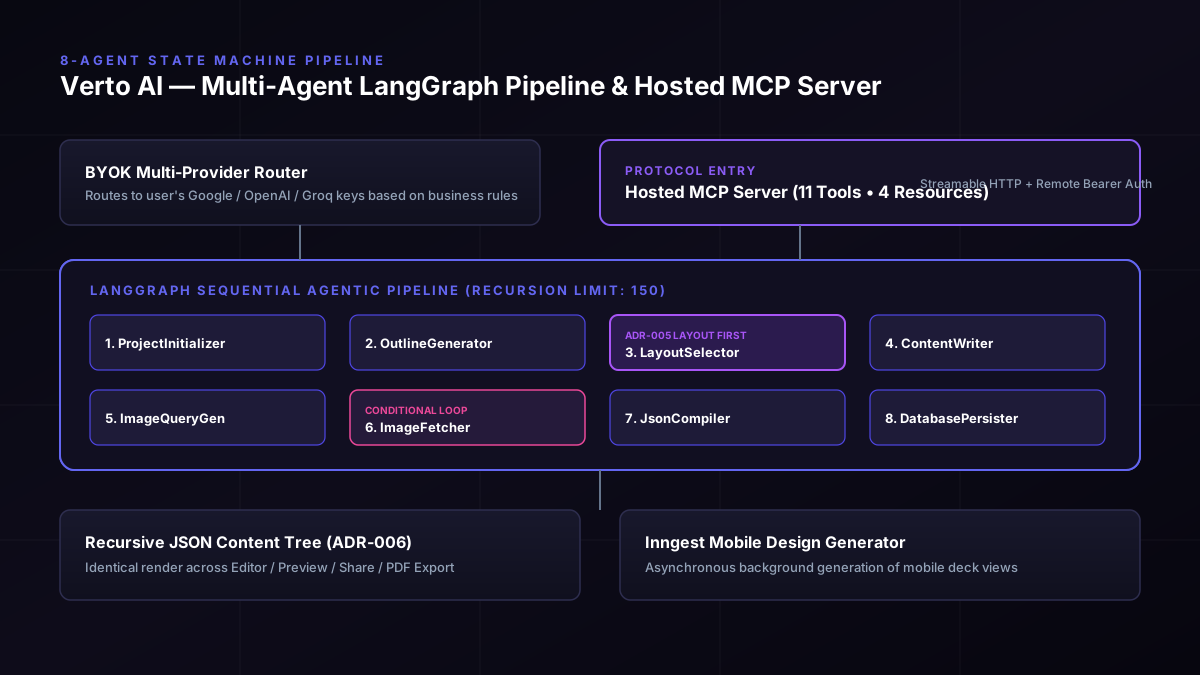
Verto AI is an interconnected AI-native platform using LangGraph, MCP, Inngest, and a shared BYOK runtime to generate, edit, publish, and programmatically manage presentations while also supporting AI-generated mobile design concepts.

Verto AI is an AI-native creative workspace built with Next.js 16. The platform combines an 8-agent LangGraph presentation pipeline, a recursive visual slide editor, an Inngest-powered mobile design subsystem, and a hosted MCP server that makes presentation workflows accessible to Claude, Cursor, and other AI clients. A shared AI runtime router handles hosted and BYOK provider selection across web generation, MCP requests, and background jobs.
“Verto is designed as both a creative application for humans and an AI-accessible presentation backend for agents.”
SYSTEM
ARCHITECTURE
Engineered for production durability, type safety, and scalable domain isolation. Every module operates with strict boundaries and predictable failure handling.
MODULAR DOMAIN ISOLATION — BUILT FOR ZERO-DOWNTIME DEPLOYMENTS, TYPE-SAFE CONTRACTS, AND FAIL-SAFE EXCEPTION BOUNDARIES.
PROJECT
IMPACT
Production performance measured under live traffic load, latency stress profiles, and automated system profiling.
ALL OUTCOMES ARE EMPIRICALLY VERIFIED IN PRODUCTION ENVIRONMENTS — MEASURED UNDER HIGH CONCURRENCY, PEAK LATENCY PROFILES, AND AUTOMATED SYSTEM HEALTH AUDITS.
LangGraph Agents
MCP Tools
MCP Resources
AI Providers
Core Subsystems
Technologies
KEY
CAPABILITIES
Core capabilities engineered for high-scale reliability, intuitive operator workflows, and real-time production execution.
PRODUCTION-TESTED SYSTEM FEATURES — ARCHITECTED FOR LOW-LATENCY INTERACTION, DETERMINISTIC STATE HANDLING, AND COMPREHENSIVE TELEMETRY.
8-Agent LangGraph State Machine
The presentation engine is implemented as a sequential LangGraph state machine. projectInitializer creates the project, outlineGenerator creates slide outlines, layoutSelector assigns visual structures, contentWriter produces structure-aware content, imageQueryGenerator creates image searches, imageFetcher resolves images with a conditional loop, jsonCompiler assembles the final Slide[] structure, and databasePersister persists the result.
Layout-First Content Generation
Layout selection happens before content generation. The content writer receives the chosen layout and produces copy based on the available visual structure. This prevents the common AI presentation problem of generating too much or too little content for a predefined slide layout.
Hosted MCP Server
Verto exposes presentation workflows through a hosted Streamable HTTP MCP endpoint. The server supports authenticated remote usage through bearer tokens as well as a local stdio transport for repository-based development. MCP clients initialize a session before accessing presentation tools and resources.
MCP App UI Widgets
MCP tool responses can be rendered as interactive sandboxed HTML widgets instead of raw JSON. Verto uses lightweight compiled widgets with structuredContent and the MCP Apps postMessage bridge to provide presentation previews, generation progress, publish cards, presentation lists, and theme interfaces inside compatible AI clients.
BYOK Multi-Provider Runtime
Users can securely configure their own AI provider keys and preferred models. A shared runtime resolver determines whether a request should use the hosted default or the user-selected Google, OpenAI, or Groq provider based on subscription and usage rules. The same resolver is reused across web generation, MCP, streaming APIs, and mobile design jobs.
Recursive Visual Slide Editor
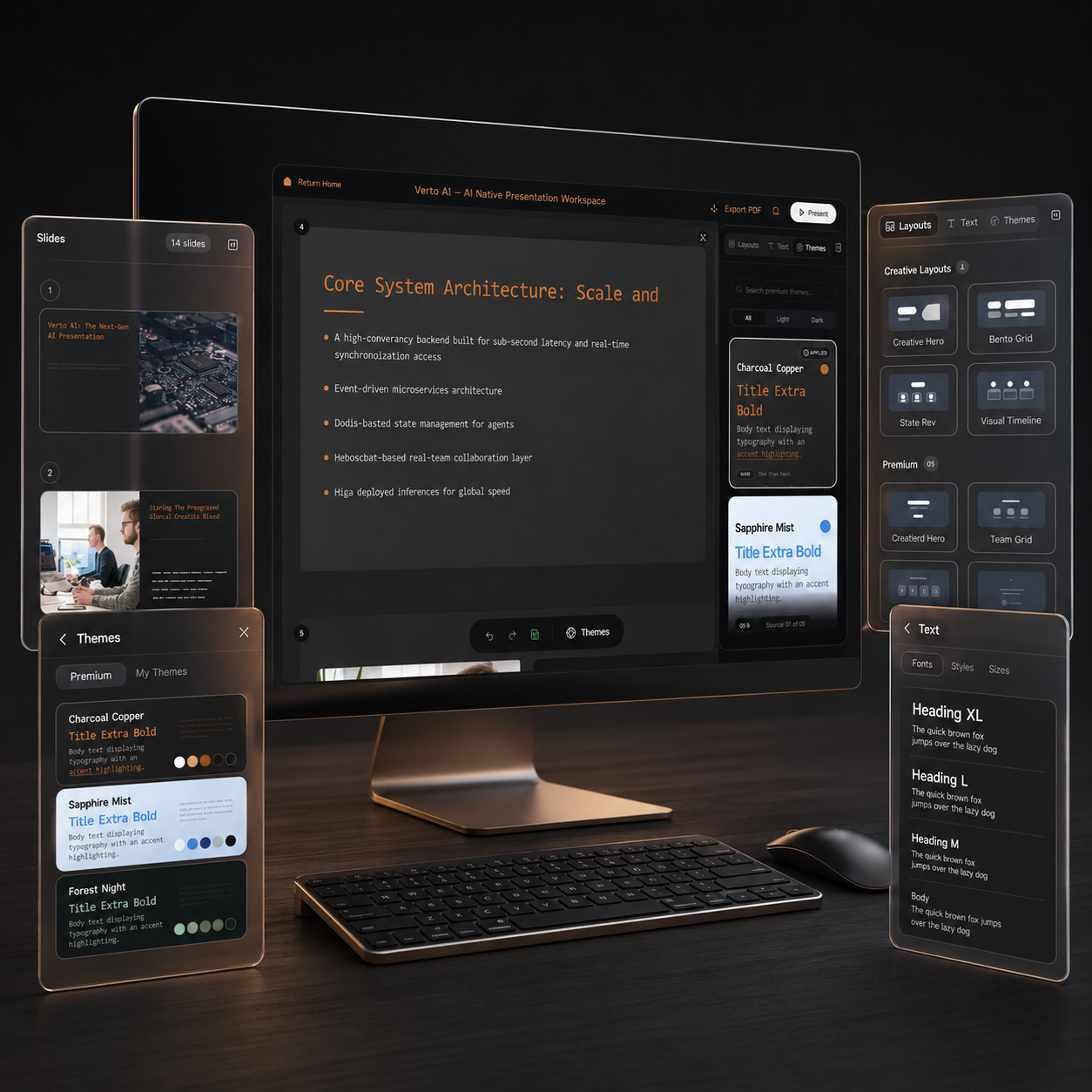
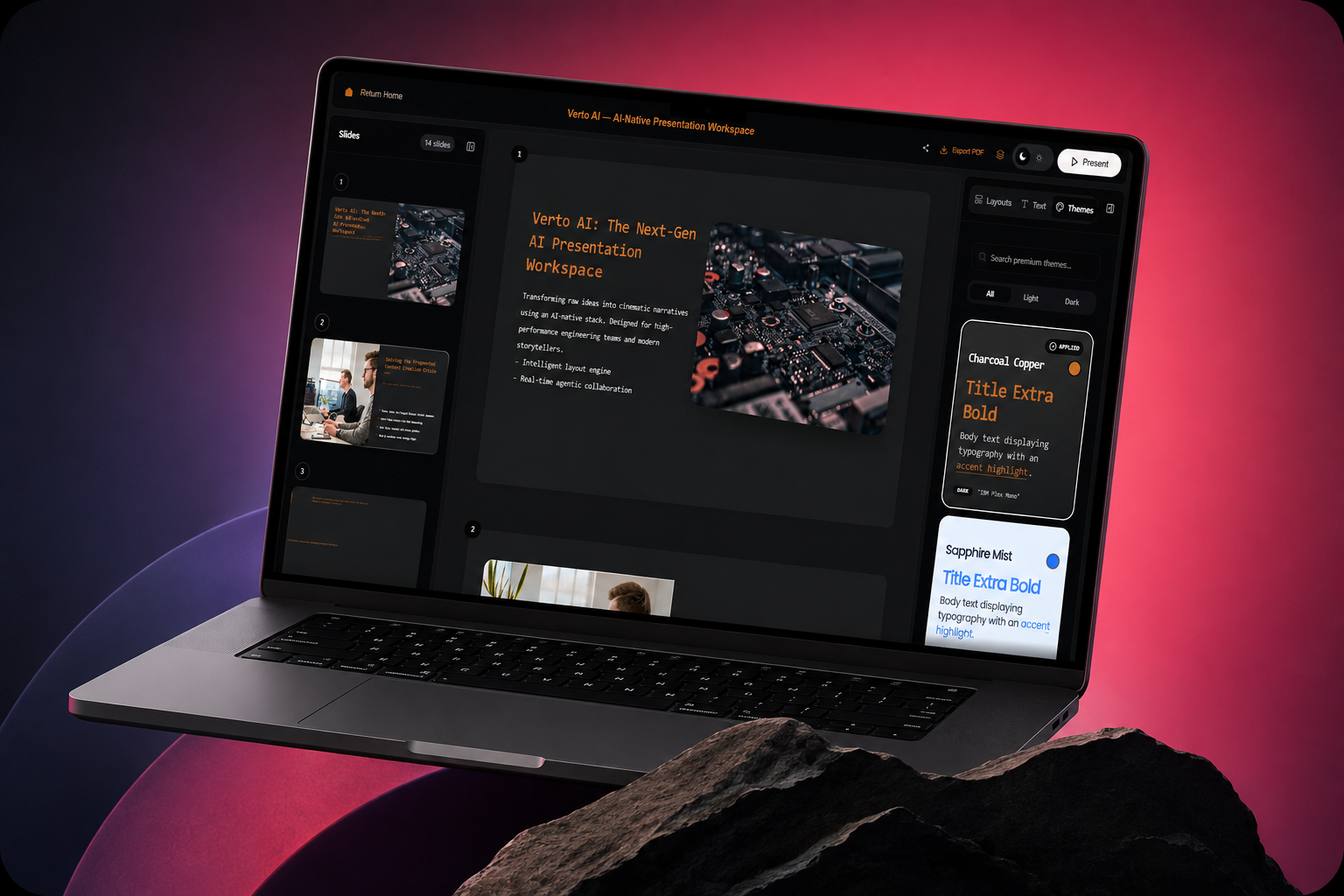
Presentation slides are represented as recursive JSON content trees. The same rendering model powers the editor, preview, public share pages, and PDF export. Zustand manages editor state, theme changes, content updates, and undo/redo behavior.
Inngest Mobile Design Generation
Verto includes a separate mobile design workspace that generates mobile UI concepts as HTML frames. Generation and individual frame regeneration run as background Inngest jobs, allowing longer-running AI tasks without blocking normal request lifecycles.
SaaS Infrastructure & Product Layer
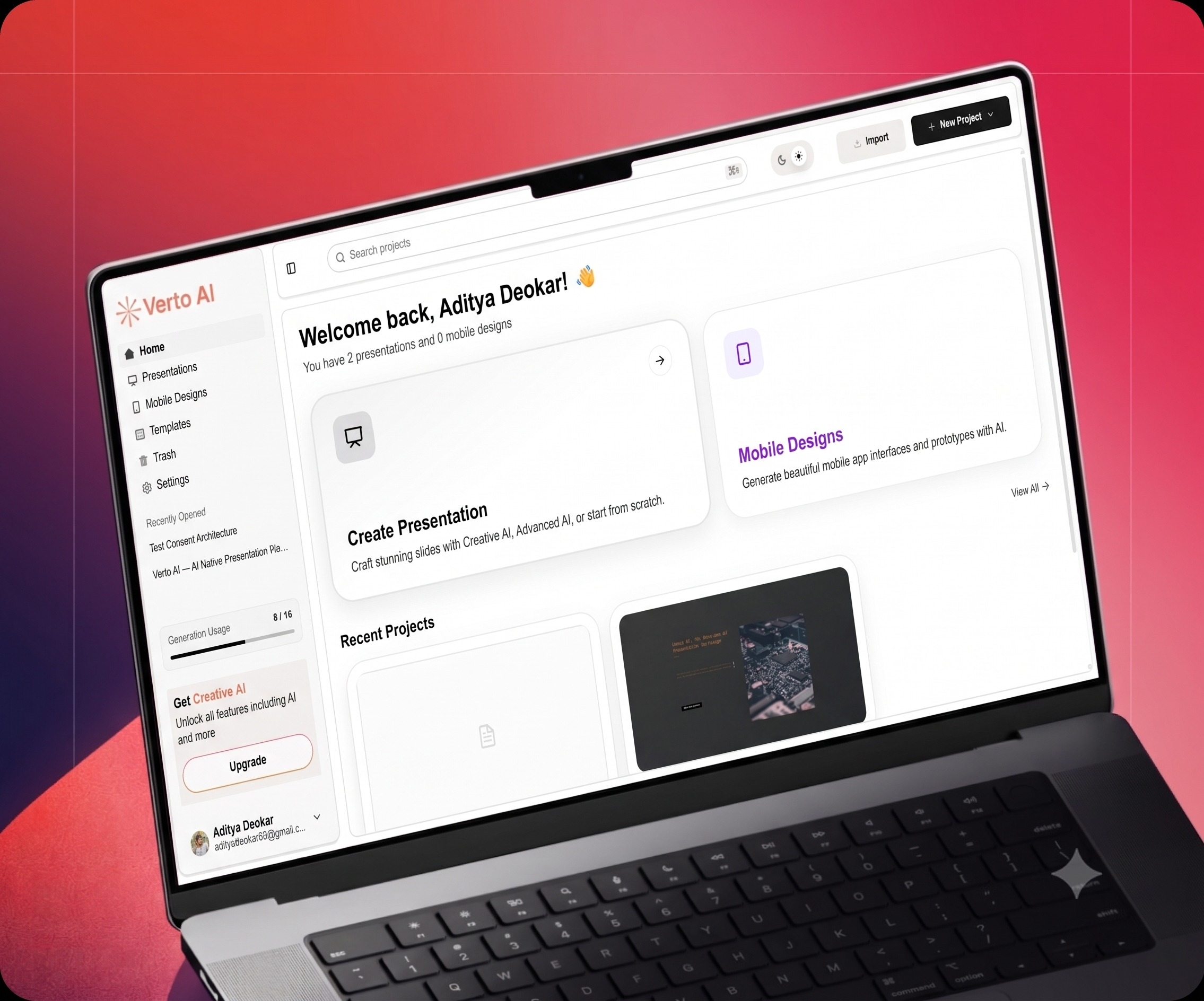
The platform includes production SaaS capabilities including Clerk authentication, Lemon Squeezy subscriptions, usage gating, templates, favorites, public sharing, soft deletion, recovery, API-key management, and persistent generation state.
SYSTEM
MODULES
Logical grouping of platform capabilities and execution primitives by architectural domain.
ISOLATED DOMAIN SPECIFICATIONS — MODULAR ARCHITECTURAL LAYERS DELIVERING HIGH THROUGHPUT AND RESILIENT FAULT TOLERANCE.
VISUAL
ARCHIVE
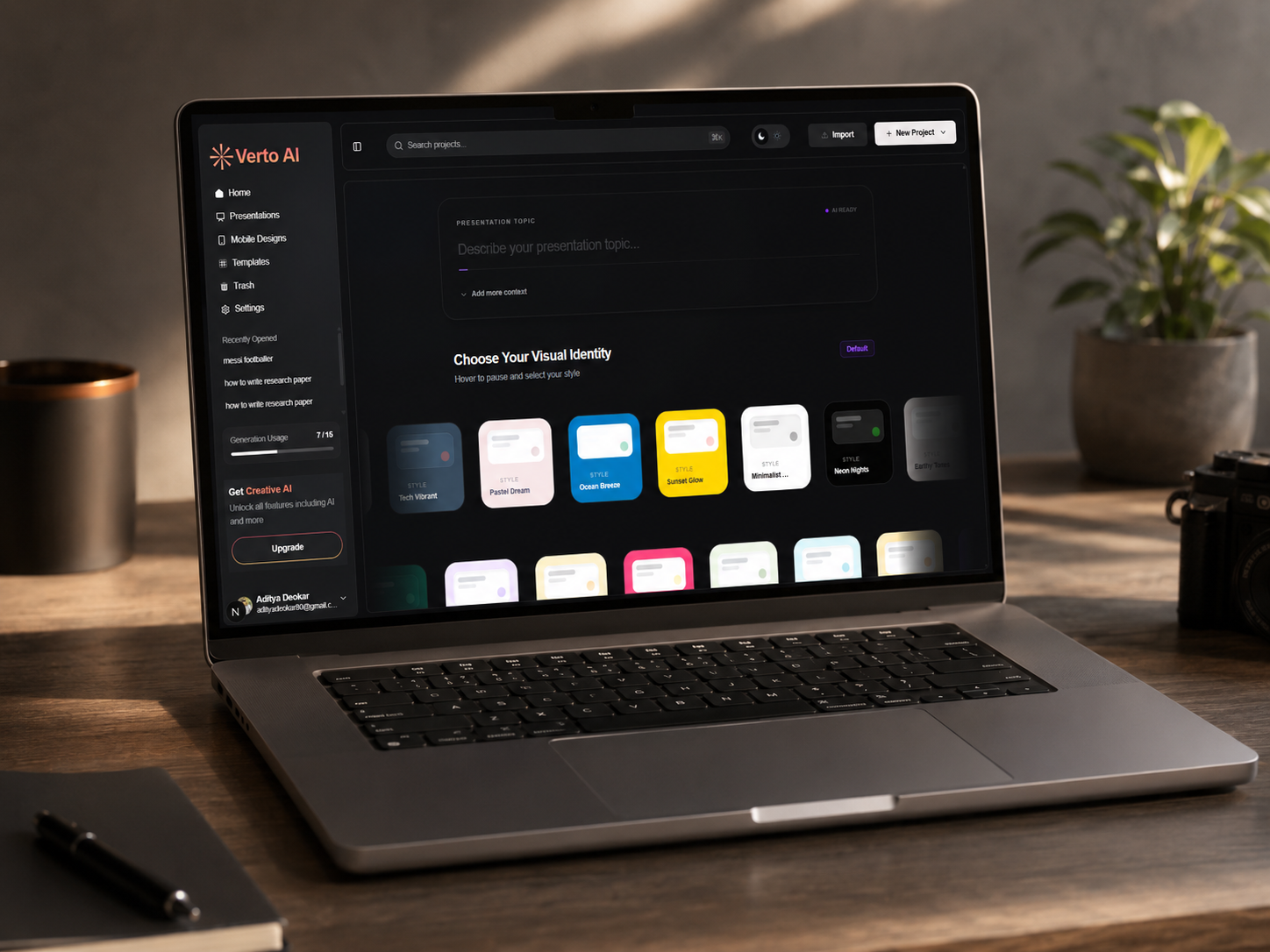
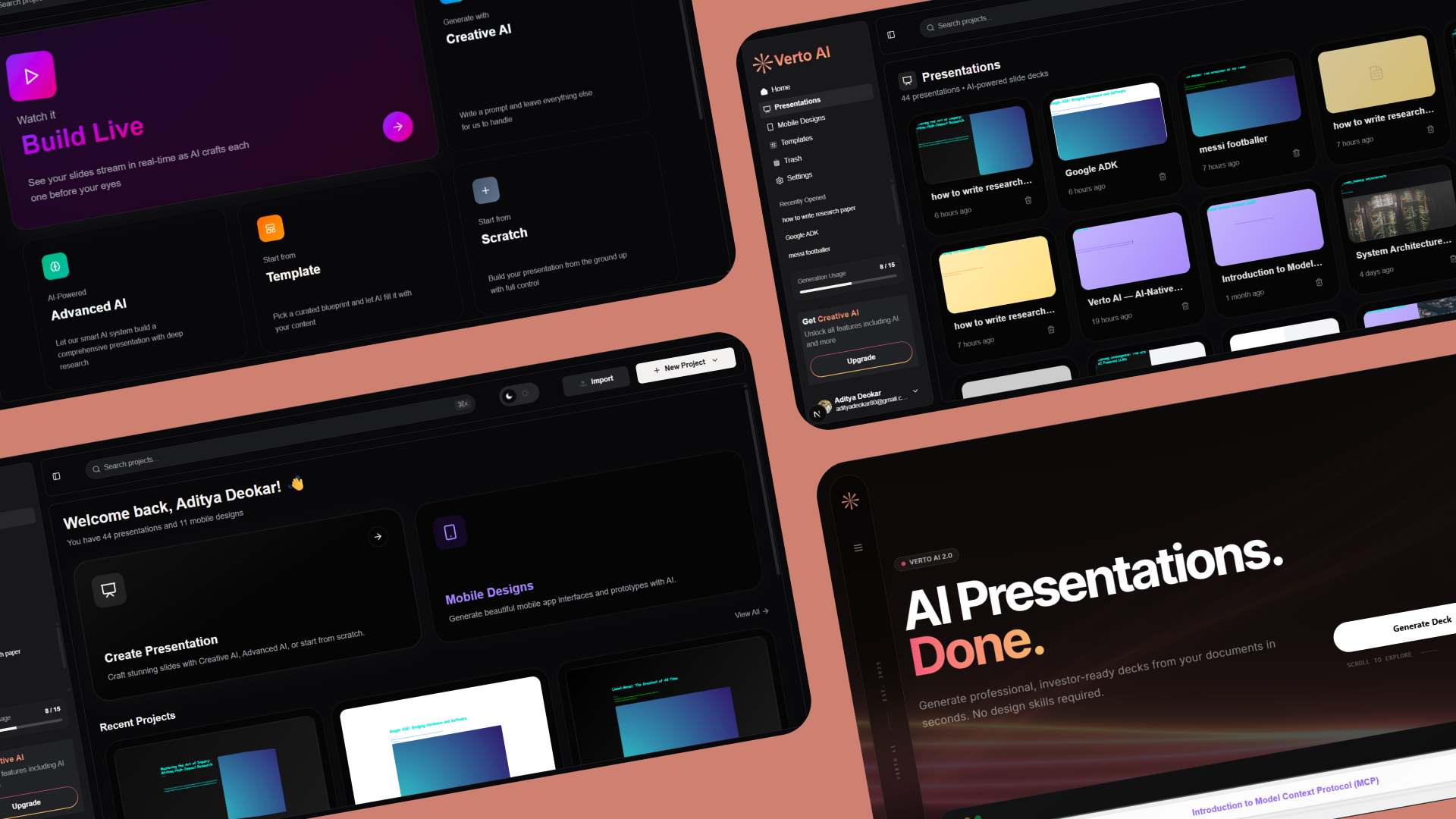
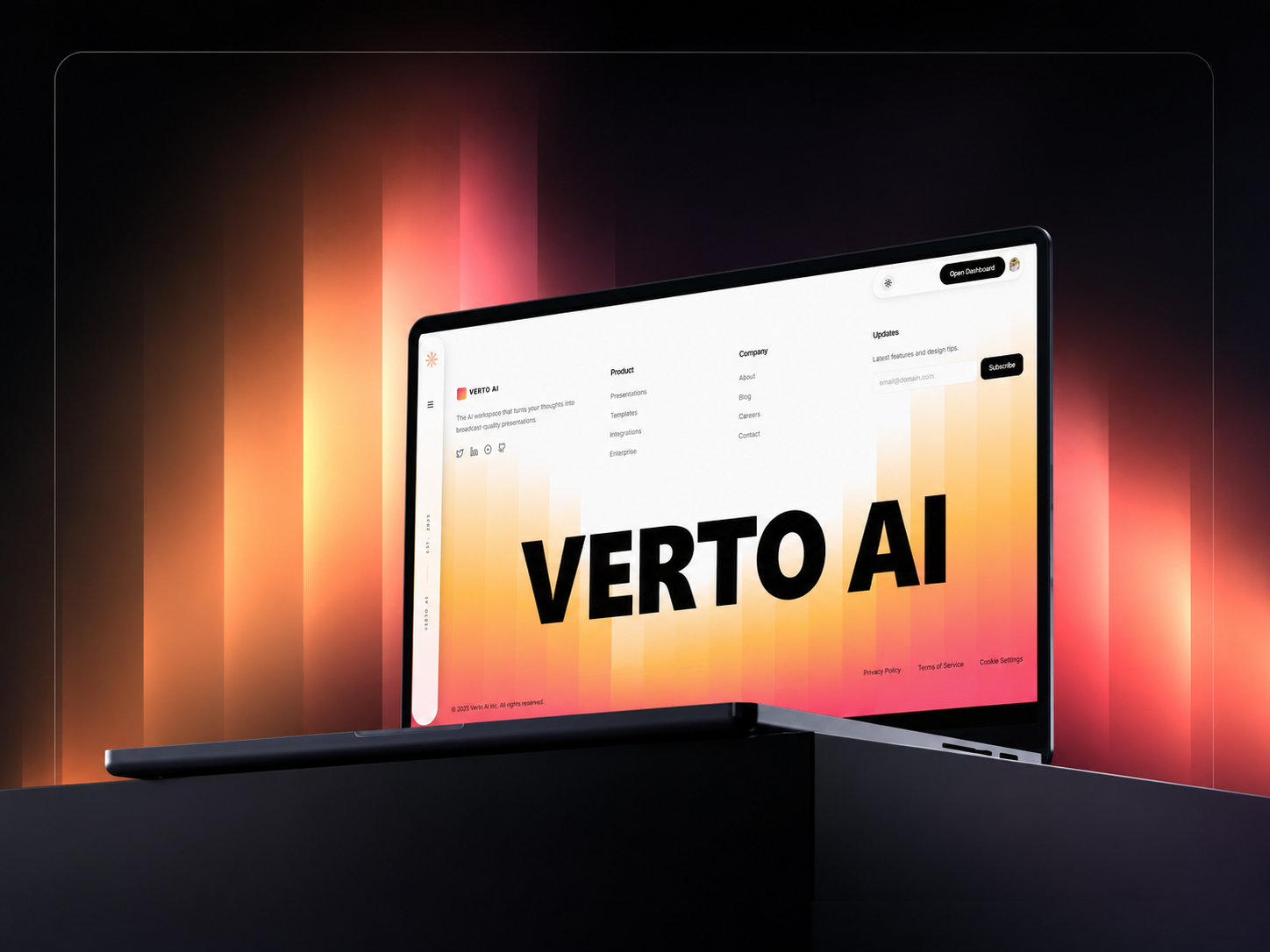
CURATED VISUALS — FEATURING INTERFACES, EXPERIENCES, AND PROTOTYPES.
DEVELOPMENT
PROCESS
A rigorous, phased engineering lifecycle designed to transform architectural requirements into scalable, production-ready systems.
DISCIPLINED SYSTEM METHODOLOGY — ARCHITECTED FOR END-TO-END OBSERVABILITY, DETERMINISTIC REVIEWS, AND ZERO-REGRESSION RELEASE CYCLES.
TECHNOLOGY
STACK
An engineered architectural map outlining foundational nodes, runtime environments, and type-safe deployment frameworks.
DETERMINISTIC ARCHITECTURE STACK — PROFILED FOR PRODUCTION LATENCY, STRICT TYPE SAFETY, AND HIGH-CONCURRENCY SCALABILITY.